Water Treatment Plant – RO, DM, DI Systems
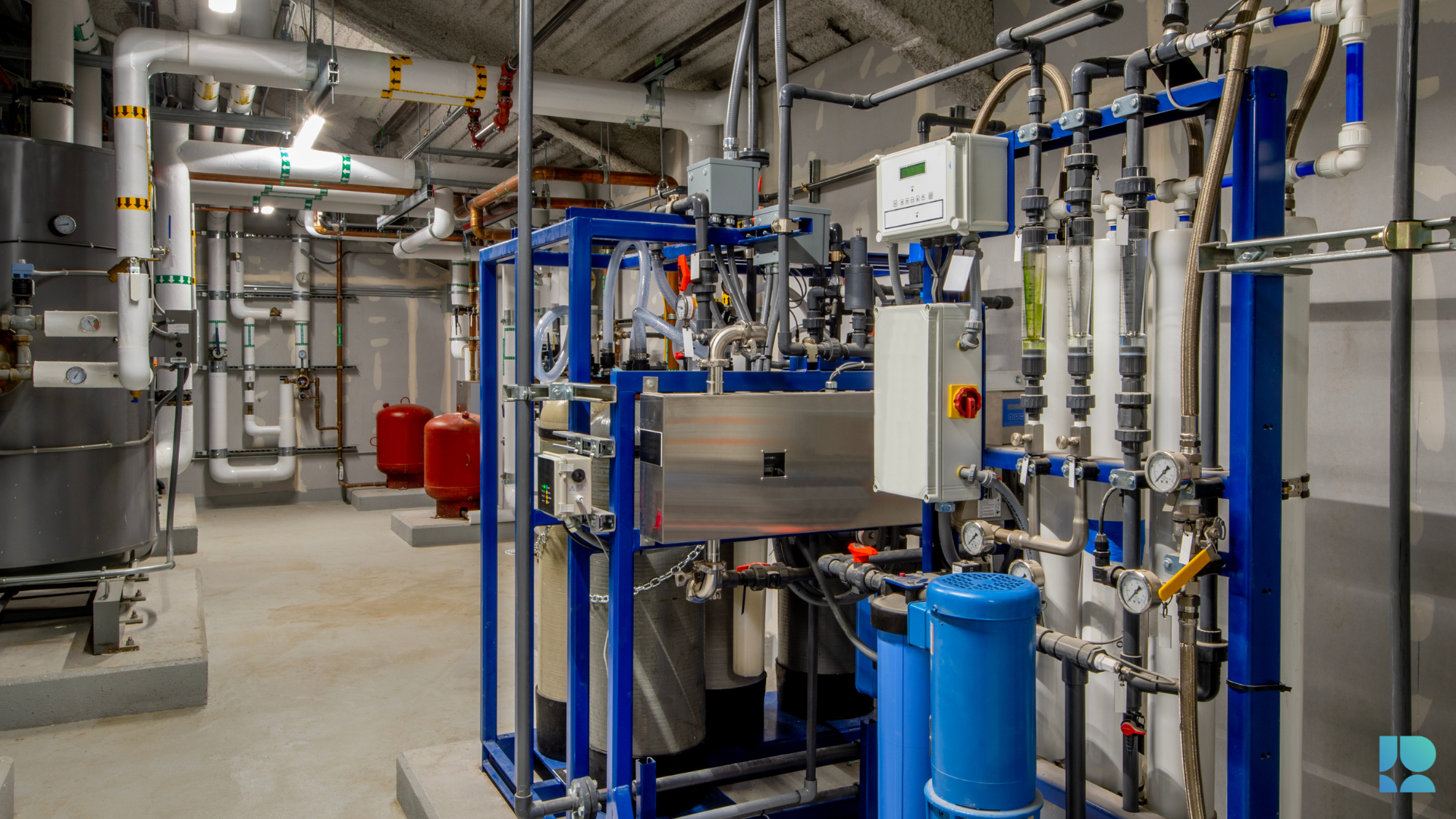
Ralsonics’ Water Treatment Plants are engineered to deliver high-purity water for industrial, commercial, and laboratory applications. With advanced technologies including Reverse Osmosis (RO), Demineralization (DM), and Deionization (DI), our systems provide reliable solutions to remove salts, minerals, suspended solids, organic impurities, and microbial contaminants from water.
Designed with cutting-edge filtration and purification processes, our water treatment systems ensure consistent quality, cost-efficiency, and eco-friendliness, meeting even the most stringent industry standards.
1. Reverse Osmosis (RO) Plant
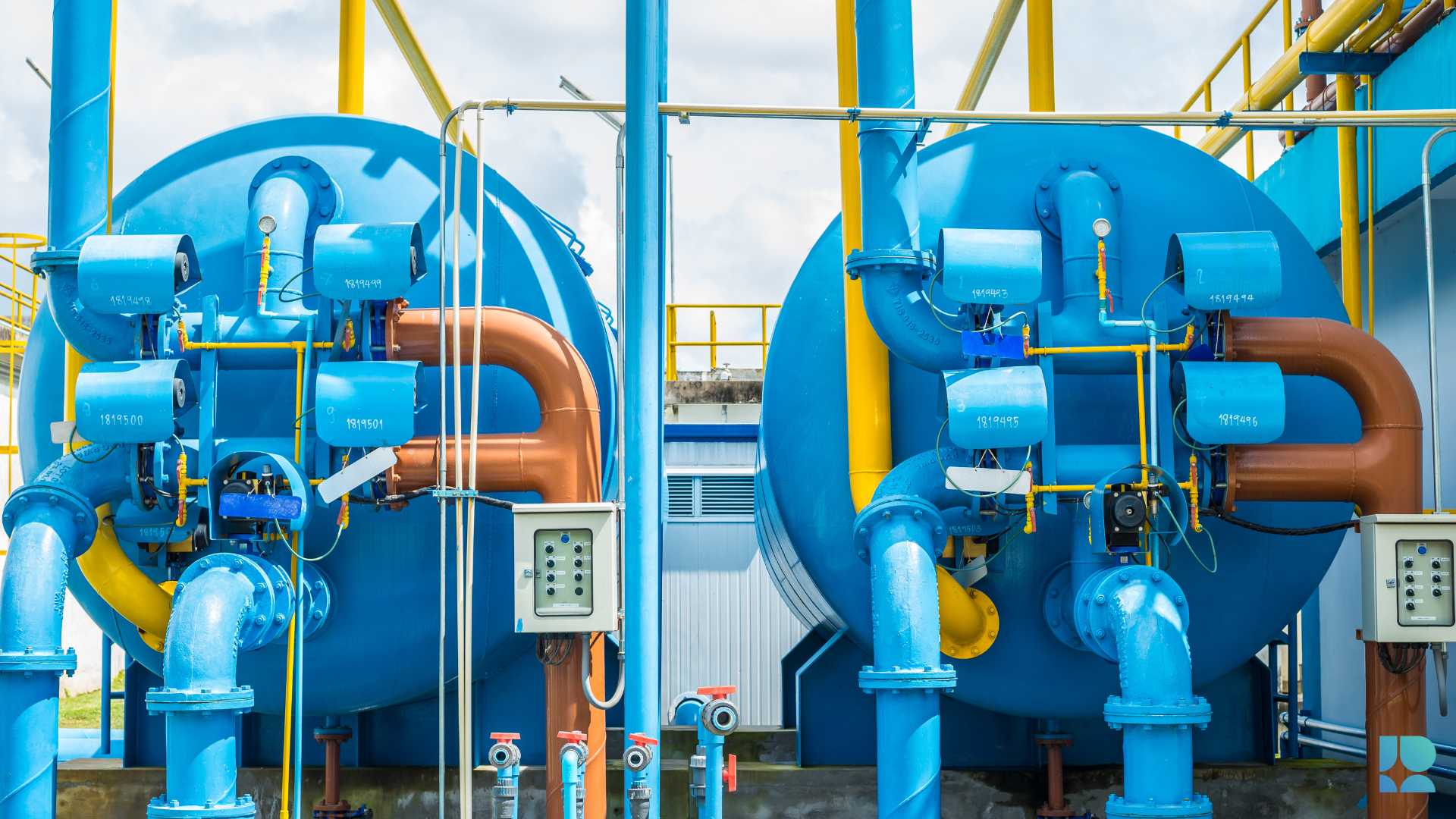
A Reverse Osmosis (RO) Plant is one of the most widely used water purification systems in the world. It works by forcing water through a semi-permeable membrane under pressure, separating dissolved salts, minerals, bacteria, and impurities. The result is low-TDS (Total Dissolved Solids), safe, and high-quality water suitable for industrial and drinking applications.
- How It Works
- Key Features
- Advantages
- Applications
- RO plants use a semi-permeable membrane to remove dissolved salts, organic matter, and bacteria.
- High-pressure pumps force water through membranes, producing low TDS, clean, and safe water.
- Suitable for industries, drinking water plants, and process applications.
- Removes up to 99% of dissolved salts, minerals, and impurities
- Multi-stage Demineralization/Purification with pre-filters, membranes, and post-treatment
- Skid-mounted design for easy installation and space saving
- Available in semi-automatic or fully automatic versions
- Robust FRP / SS 304 / SS 316L construction
- Consistently delivers safe, low-TDS water
- Low operating cost compared to bottled water or other methods
- Suitable for large-scale industrial and municipal water treatment
- Scalable design – from 100 LPH to 50,000 LPH
- Food & Beverage – Ingredient and process water
- Municipal & Drinking Water – Potable water supply
- Automotive & Metal Industry – Rinse water for surface treatment
- Pharma & Healthcare – Pre-treatment for sterile water systems
2. (DM) Plant
A Demineralization (DM) Plant uses ion-exchange technology to remove dissolved salts and minerals from water. It passes raw water through cation and anion exchange resins, which replace minerals with hydrogen (H⁺) and hydroxide (OH⁻) ions. These combine to form pure water with zero dissolved solids.
- How It Works
- Key Features
- Advantages
- Applications
- DM plants use ion-exchange resins to remove cations (calcium, magnesium, sodium) and anions (chloride, sulfate, nitrate).
- Produces completely demineralized water for boilers, pharmaceuticals, power plants, and chemical processes.
- Delivers 100% mineral-free water
- Ideal for boilers and steam generation
- Reliable for medium to large-scale industries
- Easy regeneration and low maintenance cost
- Delivers 100% mineral-free water
- Ideal for boilers and steam generation
- Reliable for medium to large-scale industries
- Easy regeneration and low maintenance cost
- Power Plants – Boiler feed water treatment
- Pharmaceuticals – Sterile water preparation
- Electronics – Rinse water for manufacturing
- Chemical Industry – High-purity process water
3. Deionization (DI) Plant
A Deionization (DI) Plant is a specialized system for producing ultra-pure water. It uses mixed-bed ion exchange resins (a combination of cation and anion resins) to remove all ionic impurities. This results in water with very low conductivity (<0.1 µS/cm), making it suitable for high-precision industries where even trace minerals can cause issues.
- How It Works
- Key Features
- Advantages
- Applications
- DI systems employ mixed-bed ion exchangers for ultra-pure water with very low conductivity.
- Ideal for semiconductors, electronics, laboratories, and high-purity applications.
- Mixed-bed resin columns for ultra-pure water
- Consistent water quality with online monitoring
- Regeneration options or replaceable resin cartridges
- Stainless steel construction with skid mounting
- Fully automatic PLC-controlled systems available
- Produces ultra-pure water for critical applications
- Compact design with easy resin replacement
- Low operating costs compared to distilled water
- Ensures consistent quality and reliability
- Semiconductors & Electronics – Wafer cleaning, PCB rinsing
- Laboratories & Research – Analytical and testing work
- Pharma & Healthcare – High-purity process water
- Optics & Precision Manufacturing – Lens cleaning, medical devices
Technical Specifications
Parameter | RO Plant | DM Plant | DI Plant |
|---|---|---|---|
Flow Capacity | 100 LPH – 50,000 LPH | 100 LPH – 25,000 LPH | 100 LPH – 10,000 LPH |
TDS Reduction | 90–99% | 100% | 100% |
Water Conductivity | < 50 µS/cm | < 10 µS/cm | < 0.1 µS/cm |
Material of Construction | FRP / SS 304 / SS 316L | SS 304 / SS 316L | SS 304 / SS 316L |
Resins / Membranes | Polyamide RO membranes | Strong acid cation & base anion resins | Mixed-bed ion exchange resins |
Automation | Semi-automatic / Fully automatic | Semi-automatic / Fully automatic | Fully automatic |
Power Supply | 230V / 415V, 50/60 Hz | 230V / 415V, 50/60 Hz | 230V / 415V, 50/60 Hz |
Wide range of technologies – RO, DM, DI, UV, UF, and more.
Customised, turnkey solutions designed for your exact water quality needs.
Global service support and long-term reliability.
Eco-friendly and energy-efficient design.
Proven performance across power, pharma, food, electronics, and automotive industries
FAQ
Custom machines are designed to match your exact cleaning requirements, ensuring better results and higher efficiency.
Yes. We manufacture large-capacity ultrasonic tanks and conveyorized systems for oversized parts.
Yes. Our systems can be equipped with PLC automation, robotic handling, and conveyors.
Yes. Machines can be built to handle aqueous or solvent-based cleaning media safely.