

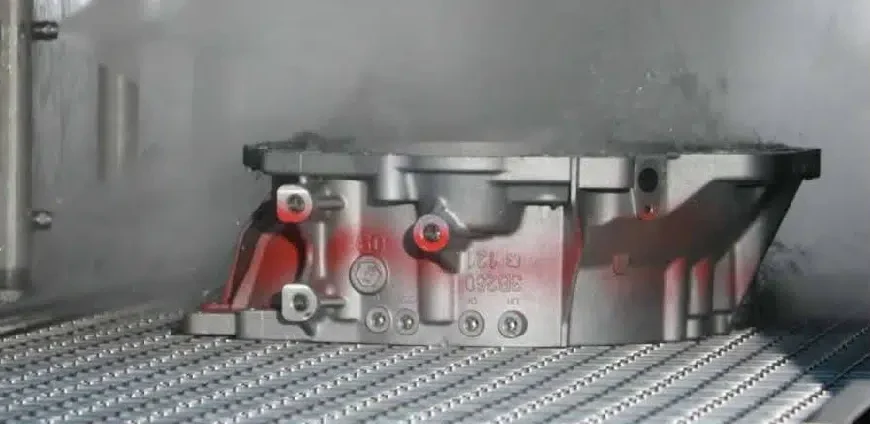
The Silent Role of Rinsing in Surface Treatment
In surface treatment processes, much attention is placed on cleaning, coating, or polishing. Yet one of the most crucial stages—rinsing—is often underestimated. Rinsing may seem like a simple act of washing away residues, but in reality, it is the step that determines whether the treated surface will achieve its intended durability, appearance, and performance.
When rinsing is overlooked or improperly executed, contaminants remain on the surface, leading to adhesion failures, corrosion, staining, and even premature part rejection. In high-volume production, this translates into costly rework, waste, and compromised product reliability.
Why Rinsing Matters More Than You Think
The purpose of rinsing extends far beyond “removing dirt.” Its functions include:
- Eliminating Chemical Residues: Cleaning agents, acids, and plating solutions must be thoroughly removed to prevent surface damage or unwanted chemical reactions.
- Preventing Cross-Contamination: Residues carried over from one process bath to the next can alter chemistry and compromise process consistency.
- Ensuring Surface Integrity: Proper rinsing safeguards against microscopic residues that affect coating adhesion, solderability, or biocompatibility.
Common Problems Caused by Improper Rinsing
- Staining & Discoloration – Minerals or residues left behind can cause unsightly marks that affect both aesthetics and function.
- Corrosion & Oxidation – Residual salts or chemicals accelerate corrosion, particularly in aerospace and automotive applications.
- Poor Adhesion of Coatings – Incomplete rinsing leaves films that prevent uniform bonding of paints, coatings, or plating layers.
- Defective Electrical Performance – In electronics, even microscopic ionic contaminants can compromise conductivity and reliability.
Advanced Rinsing Techniques for Better Results
Traditional single-stage rinses often fail to meet the demands of modern manufacturing. Advanced rinsing techniques now play a critical role in ensuring reliable outcomes.
- Cascade Rinsing: Multiple rinse tanks arranged in series with counterflow water circulation. This method maximizes cleanliness while minimizing water consumption, making it both effective and sustainable.
- Spray-Assisted Rinsing: Combines immersion and high-pressure spray jets to dislodge particles from complex geometries.
- Ultrasonic-Assisted Rinsing: Integrates cavitation energy into the rinse bath, ensuring even microscopic residues are removed from intricate parts.
- Flow-Controlled Rinsing: Optimized water flow rates maintain consistent rinsing quality while reducing waste.
Designing an Effective Rinsing System
To achieve optimal results, rinsing systems must be designed with:
- Water Quality Control: Using deionized (DI) or ultra-pure water prevents mineral deposits.
- Bath Agitation: Improves particle removal and prevents re-deposition on surfaces.
- Automated Flow Monitoring: Ensures water usage is efficient while maintaining repeatable quality.
- Closed-Loop Recycling Systems: Reduce environmental footprint while providing consistent rinse quality.
Industries Where Rinsing is Critical
- Semiconductors: Any residual contamination can cause defects at the microscopic level.
- Medical Devices: Incomplete rinsing can compromise sterilization and regulatory compliance.
- Aerospace: Residues left on treated metals may accelerate corrosion or weaken coatings.
- Electronics: Ionic contaminants can impair conductivity and long-term reliability.
The Future of Rinsing in Surface Treatment
As manufacturing evolves, rinsing will move from being seen as a “supporting step” to a critical quality gate. Emerging trends include automated rinse quality sensors, water-saving cascade designs, and integration with Industry 4.0 systems to monitor cleanliness in real-time. In the near future, rinsing will be as tightly controlled as coating and plating themselves.
Conclusion
Rinsing may be the quietest step in surface treatment, but it is also the most decisive. Overlooking rinsing means risking defects, rework, and performance failures. By adopting advanced rinsing technologies—such as cascade rinses, flow-controlled systems, and ultrasonic-assisted rinsing—manufacturers can ensure surfaces remain flawless, coatings adhere properly, and products meet the highest standards of durability and reliability.
Want to explore advanced rinsing solutions designed for your industry? Reach out to our experts today.

