

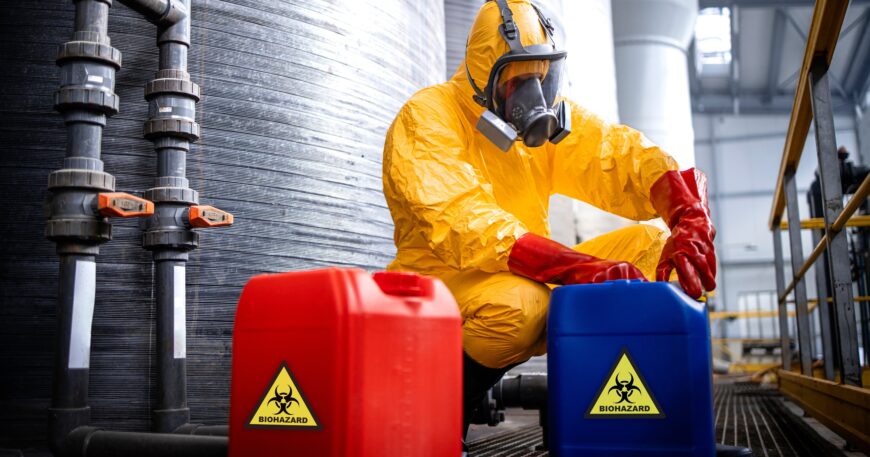
The 5 Most Dangerous Cleaning Chemicals Still Used in India
Why It’s Time to Rethink Industrial Cleaning Practices
India’s manufacturing sector has made extraordinary strides in automation, quality control, and sustainability. Yet, one area often overlooked remains alarmingly outdated: the chemicals used in industrial cleaning.
From metal finishing shops to automotive plants, factories still rely on harsh acids, solvents, and degreasers that pose serious risks to both worker health and the environment. These chemicals may promise quick results, but their long-term costs—in air quality, wastewater toxicity, and human safety—are staggering.
As global industries shift toward safer, water-based, and ultrasonic cleaning alternatives, it’s crucial for Indian manufacturers to recognize what’s at stake.
1. Trichloroethylene (TCE): The Silent Carcinogen
Trichloroethylene, once the go-to solvent for degreasing and metal cleaning, is now one of the most heavily restricted chemicals worldwide. Known to cause liver and kidney damage, chronic exposure can also lead to neurological effects and certain cancers.
Despite this, TCE continues to appear in degreasing applications across India due to its low cost and fast cleaning action.
Safer Alternative: Ultrasonic solvent-free degreasers effectively remove oils, waxes, and residues using cavitation energy rather than toxic solvents—offering equal efficiency without the health risks.
Industry Impact Example: In automotive component manufacturing, replacing TCE with ultrasonic aqueous cleaning systems has helped companies reduce hazardous waste disposal costs by over 50%.
2. Hydrofluoric Acid (HF): The Dangerous Brightener
Hydrofluoric acid is still used in metal surface treatment and pickling to remove oxides and scale. What makes HF particularly hazardous is its ability to penetrate skin and cause deep tissue damage—even from minor contact.
Beyond worker safety, HF poses severe environmental risks, as it is highly corrosive and difficult to neutralize in wastewater systems.
Safer Alternative: Automated multistage cleaning equipment using controlled aqueous chemistry or ultrasonic energy achieves surface preparation without the danger of acid burns or toxic vapors.
Industry Example: In aerospace and precision machining, manufacturers now use electrolytic cleaning systems that provide oxide removal without the use of hazardous acids.
3. Perchloroethylene (PCE): The Persistent Pollutant
Often used for vapor degreasing, PCE is another chlorinated solvent with high toxicity and persistence in groundwater. Its slow degradation rate means even small leaks can contaminate water sources for decades.
Safer Alternative: Vapor-free ultrasonic systems or single-chamber aqueous cleaning systems replace chlorinated solvents with biodegradable solutions, maintaining cleaning performance while eliminating emissions.
Industry Example: In electronics manufacturing, PCE replacement has improved worker air quality while meeting global RoHS and REACH standards.
4. Sodium Hydroxide (Caustic Soda): The Overused Alkaline
While not as toxic as chlorinated solvents, sodium hydroxide is often overused in high concentrations for degreasing and paint stripping. Its corrosive nature damages both equipment and sensitive components, and its high pH wastewater can disrupt effluent treatment balance.
Safer Alternative: Controlled pH aqueous formulations in ultrasonic cleaning systems achieve the same results using mild detergents and targeted cavitation, drastically reducing chemical usage.
Industry Example: In food processing equipment cleaning, switching from caustic baths to ultrasonic aqueous cleaning has reduced water consumption and neutralization costs by 40%.
5. Phosphoric Acid: The Hidden Polluter in Surface Prep
Phosphoric acid is still widely used in India for phosphating and metal pretreatment. While effective, it contributes to phosphate pollution in water bodies, leading to eutrophication and ecosystem damage.
Safer Alternative: Low-phosphate and phosphate-free cleaning formulations used in automated surface treatment plants achieve corrosion resistance without the environmental toll.
Industry Example: In automotive OEM paint shops, converting to closed-loop, phosphate-free pretreatment systems has reduced sludge generation and improved bath life.
Why This Matters: Health, Environment, and Global Standards
Continued reliance on outdated chemicals isn’t just an operational issue—it’s a reputational and regulatory risk.
- Worker Health: Chronic exposure increases respiratory and skin-related health issues.
- Environmental Impact: Groundwater and air contamination can trigger costly remediation.
- Export Compliance: Many international clients now require REACH and RoHS-compliant cleaning methods.
Forward-thinking manufacturers are already adopting green, ultrasonic, and automated aqueous systems to meet these demands—without sacrificing cleaning precision or throughput.
Building a Safer Future for Industrial Cleaning
The transition away from hazardous chemicals is no longer optional—it’s inevitable. The technology to make it possible already exists.
Modern ultrasonic cleaning systems, multistage aqueous lines, and closed-loop surface treatment plants deliver cleaner results, safer operations, and lower lifetime costs.
By eliminating toxic solvents and acids, Indian manufacturers can safeguard worker health, meet sustainability goals, and strengthen global competitiveness.
Conclusion: Clean Parts Shouldn’t Come at a Dirty Cost
Industrial cleaning doesn’t have to rely on harmful chemistry to be effective. By replacing traditional solvents and acids with ultrasonic and aqueous cleaning solutions, manufacturers can achieve higher cleanliness, greater consistency, and a healthier workplace.
It’s time to clean smarter, not harsher.
Want to know how to transition from hazardous chemicals to safe, sustainable cleaning systems?
Talk to our experts today.

