

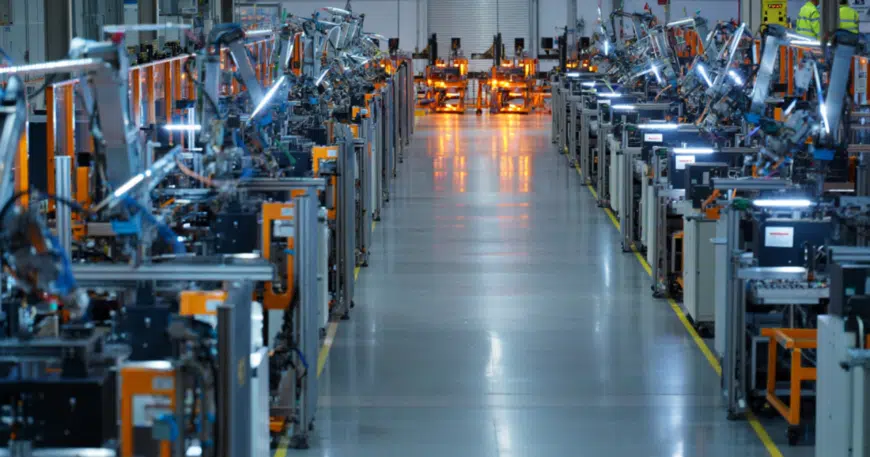
Three weeks ago, I got a call from a tier-1 automotive supplier in Pune. They’d just commissioned a ₹200 crore precision machining line. State-of-the-art CNC machines. German robotics. The works.
Their rejection rate? 11%.
The problem? Residual machining oils and micro-particles on components. Parts looked clean to the naked eye but were failing quality audits. They’d invested everything in production capacity and almost nothing in post-process cleaning infrastructure.
This is the conversation India isn’t having.
We’re in the middle of a manufacturing renaissance, but we’re missing a critical link
The PLI schemes are working. Semiconductor fabs are coming. Battery plants are being announced. EV production is ramping up. India is finally building the manufacturing muscle we’ve dreamed about for decades.
But here’s what I see from the factory floor: we’re replicating the same mistake that held us back in the 2000s. We’re obsessing over production throughput while treating cleaning and surface preparation as an afterthought, a “nice to have” instead of mission-critical infrastructure.
I’ll be blunt: you cannot build precision electronics, medical devices, or next-generation automotive components with yesterday’s cleaning technology. You just can’t. The standards have changed — and most factories haven’t caught up
When we started Ralsonics, industrial cleaning meant degreasing tanks and maybe a spray washer if you were fancy. Today? We’re talking about micron-level particulate removal. We’re talking about parts going into oxygen sensors, battery assemblies, implantable medical devices.
The global supply chain doesn’t care about our good intentions. If your components have 10 microns of contamination when the spec says 5, you’re out. Not negotiable.
And here’s the harder truth: manual cleaning, solvent baths, and legacy equipment won’t get you there. Not at scale. Not consistently. Not when you’re trying to compete with factories in Taiwan, Germany, or Korea where advanced cleaning is built into the production line from day one.
This isn’t just about equipment, it’s about mindset
The Pune supplier I mentioned? We didn’t just sell them an ultrasonic cleaning system. We redesigned their entire post-machining workflow. We mapped out contamination risks at each stage. We trained their team to think about surface preparation the way they think about machining tolerances.
Their rejection rate is now under 2%. Same production line. Same team. Different infrastructure.
That’s the shift India needs to make industry-wide. Cleaning isn’t the janitor’s job anymore — it’s precision engineering. It’s the invisible backbone that determines whether your “Make in India” product meets “Made for the World” standards.
I’m building Ralsonics to be part of that shift. And with Prime — our new valve line — we’re showing what’s possible when you build surface engineering thinking into a product from the ground up, not bolt it on later.
The manufacturers who get this will win the next decade
India has the talent. We have the drive. We’re getting the capital and the policy support. But if we’re serious about becoming a global manufacturing hub — not just a low-cost alternative — we need to obsess over the details everyone else is overlooking.
Starting with how we clean.
Because the dirtiest secret in Indian manufacturing isn’t the contamination on your parts. It’s the contamination in our thinking, the idea that production volume matters more than production quality.
It doesn’t. Not anymore.

