Ultrasonic Heat Exchanger Cleaning Attachments
Heat exchangers play a critical role in industrial processes, HVAC systems, power plants, and chemical industries. Over time, they suffer from fouling, scaling, and biofilm buildup, which reduces thermal efficiency, increases energy consumption, and leads to costly downtime.
Ralsonics Ultrasonic Heat Exchanger Cleaning and Scale Prevention Systems offer an innovative, eco-friendly solution to remove and prevent scale deposits. Using high-frequency ultrasonic waves, these systems clean heat exchanger surfaces thoroughly and continuously, ensuring optimal heat transfer efficiency and longer equipment life.
- Regular Maintenance: Ideal for routine maintenance of heat exchangers to ensure optimal performance.
- Scale and Fouling Removal: Effectively removes scale, fouling, and other contaminants to improve heat transfer efficiency.
- Industrial Applications: Suitable for cleaning heat exchangers in various industrial settings.
- Precise and Gentle Cleaning: Provides thorough cleaning without damaging sensitive equipment surfaces.
Ultrasonic transducers are mounted on or immersed in the heat exchanger system.
These generate high-frequency sound waves, creating microscopic cavitation bubbles in the fluid.
The implosion of bubbles produces micro-jets and shockwaves, which:
- Break down and remove existing scale, fouling, and biofilm.
- Prevent new deposits from adhering to the surfaces.
The process is non-invasive, chemical-free, and continuous, ensuring minimal downtime.
- Retrofit Design – Can be installed on new or existing sieve machines.
- Mesh Anti-Clogging Technology – Prevents screen blinding and improves throughput.
- Wide Frequency Range – Typically operates at 36 – 40 kHz ultrasonic frequency
- Compatible with Fine Meshes – Works efficiently with meshes up to 20 microns
- Digital Generator Control – Stable output with adjustable power settings.
- Energy Efficient – Optimized ultrasonic power consumption.
- Durable Build – Long-lasting stainless steel and robust transducer assembly.
- Safe for Sensitive Materials – Gentle ultrasonic action avoids damage to fragile powders.
- Extended Equipment Life – Prevents corrosion and mechanical stress caused by scale buildup.
- Higher Energy Efficiency – Clean surfaces ensure optimal heat transfer, lowering energy costs.
- Reduced Downtime – Enables continuous operation without frequent manual cleaning.
- Lower Maintenance Costs – Less need for chemical cleaning and mechanical scrubbing.
- Eco-Friendly Operation – Supports green manufacturing with minimal chemical use.
- Versatile Application – Suitable for water-cooled condensers, boilers, chillers, and industrial heat exchangers.
- Chemical Industry: Maintains optimal heat transfer efficiency in chemical processing equipment.
- Oil and Gas Industry: Ensures cleanliness and efficiency of heat exchangers in refineries and processing plants.
- Power Generation: Keeps heat exchangers in power plants operating efficiently.
- Food and Beverage Industry: Ensures hygienic and efficient operation of heat exchangers used in food processing.
- Pharmaceutical Industry: Maintains the cleanliness and efficiency of heat exchangers in pharmaceutical manufacturing.
- HVAC Systems: Ensures optimal performance of heat exchangers in heating, ventilation, and air conditioning systems.
Features and Advantages
Features | Advantages |
|---|---|
High-Power Ultrasonic Transducer System | Generates intense cavitation to remove scale, fouling, sludge, and deposits effectively. |
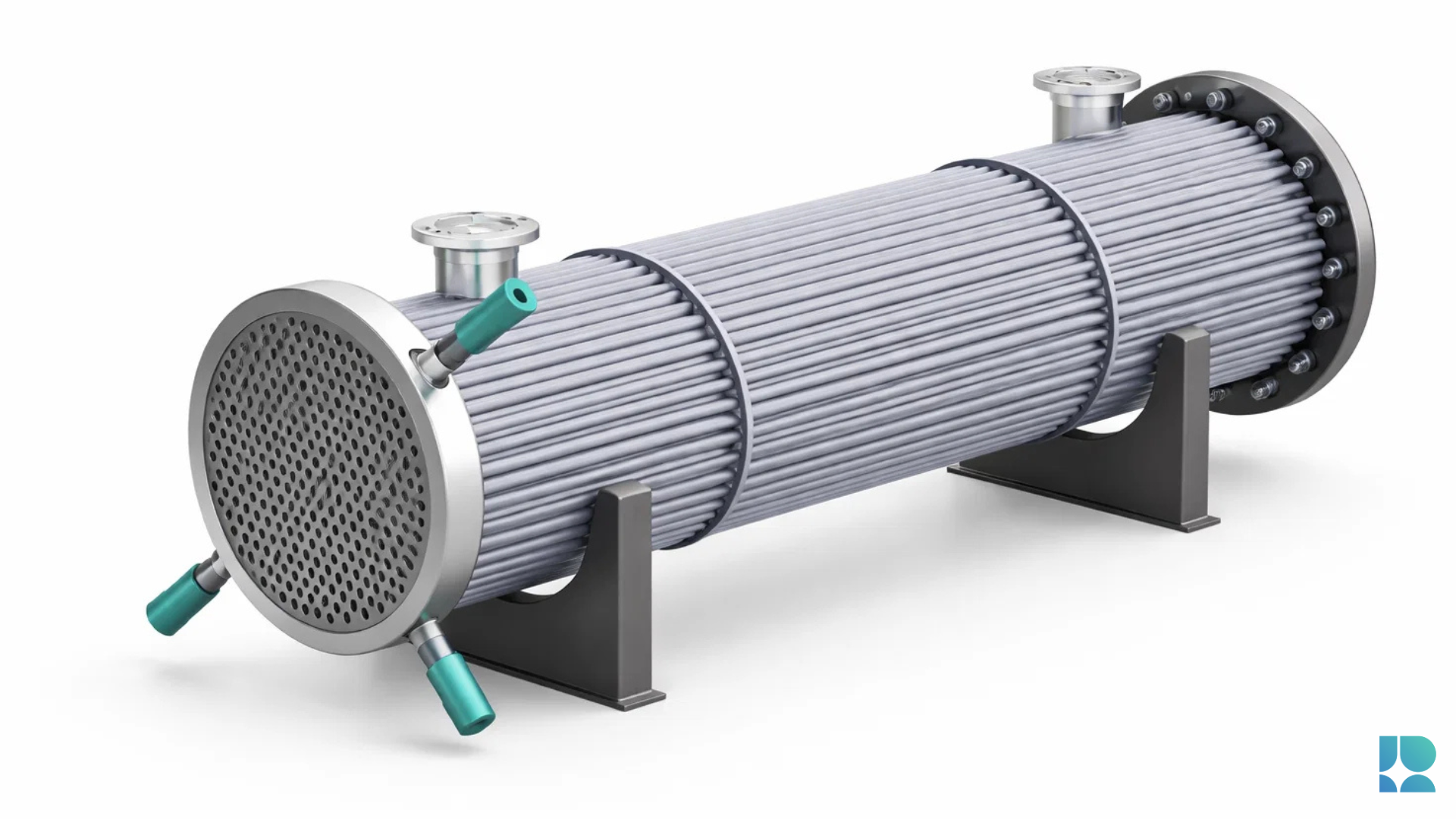
Designed for Tube & Shell Heat Exchangers | Cleans internal tube surfaces without dismantling the entire system (depending on setup). |
Non-Destructive Cleaning Process | Removes contaminants without damaging tube walls or coatings. |
Immersible / Clamp-On Attachment Options | Flexible installation based on exchanger design and maintenance requirements. |
Wide Frequency Range (Low & Medium kHz Options) | Suitable for removing both heavy scale and fine deposits. |
Stainless Steel Construction (SS304 / SS316) | Ensures corrosion resistance and durability in harsh industrial environments. |
Portable & Retrofit-Friendly Design | Easily integrated into existing cleaning setups or maintenance routines. |
Reduces Downtime | Faster cleaning cycles compared to manual or chemical-only methods. |
Improves Heat Transfer Efficiency | Restores exchanger performance by removing insulating deposits. |
Reduces Chemical Usage | Minimizes reliance on aggressive descaling chemicals, lowering environmental impact. |
Energy-Efficient Ultrasonic Generators | Provides effective cleaning with optimized power consumption. |
Low Maintenance & Long Operational Life | Robust design ensures reliability in continuous industrial applications. |
Technical Specifications
Parameter | Specification |
|---|---|
Ultrasonic Frequency | 20 kHz – 40 kHz |
Transducer Type | Immersible / clamp-on |
Material of Construction | SS 304 / SS 316L |
Cleaning Method | In-situ ultrasonic cavitation |
Scale Types Removed | Calcium carbonate, silica, iron oxide, biofilm |
Power Supply | 230V / 415V, 50/60 Hz |
System Integration | Custom-engineered for each heat exchanger |
Optional Features | Automatic monitoring, PLC control, remote diagnostics |
FAQ
Ultrasonic waves create cavitation in the fluid, which continuously disrupts the formation of scale and biofilm, keeping surfaces clean.
Yes. Most ultrasonic cleaning and prevention systems are designed for in-site installation, allowing cleaning during operation.
Yes. The system is non-invasive and gentle, suitable for shell-and-tube, plate, and finned heat exchangers.
Unlike chemical descaling, ultrasonic cleaning is eco-friendly, cost-effective, and continuous, reducing downtime and chemical costs.