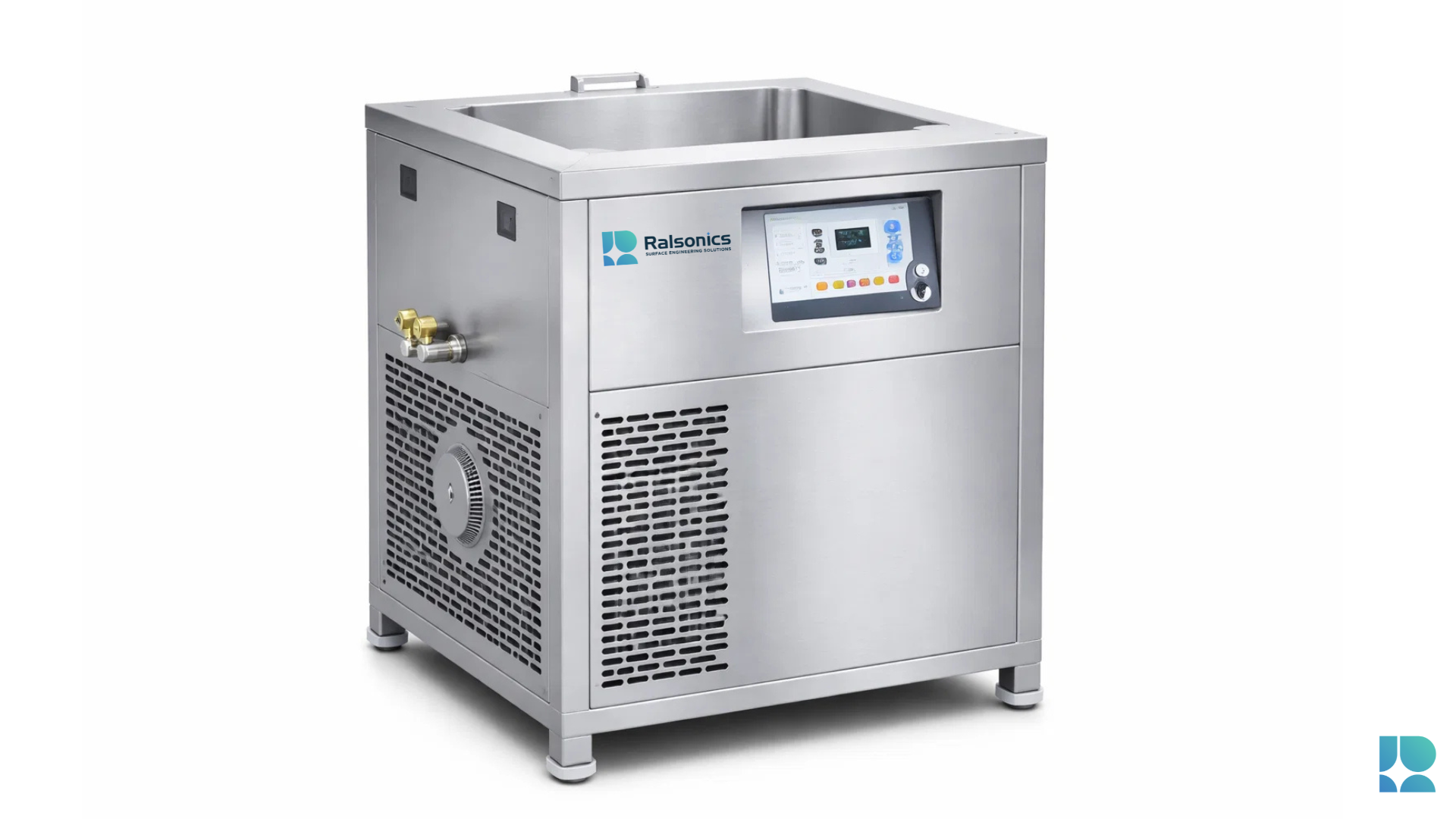
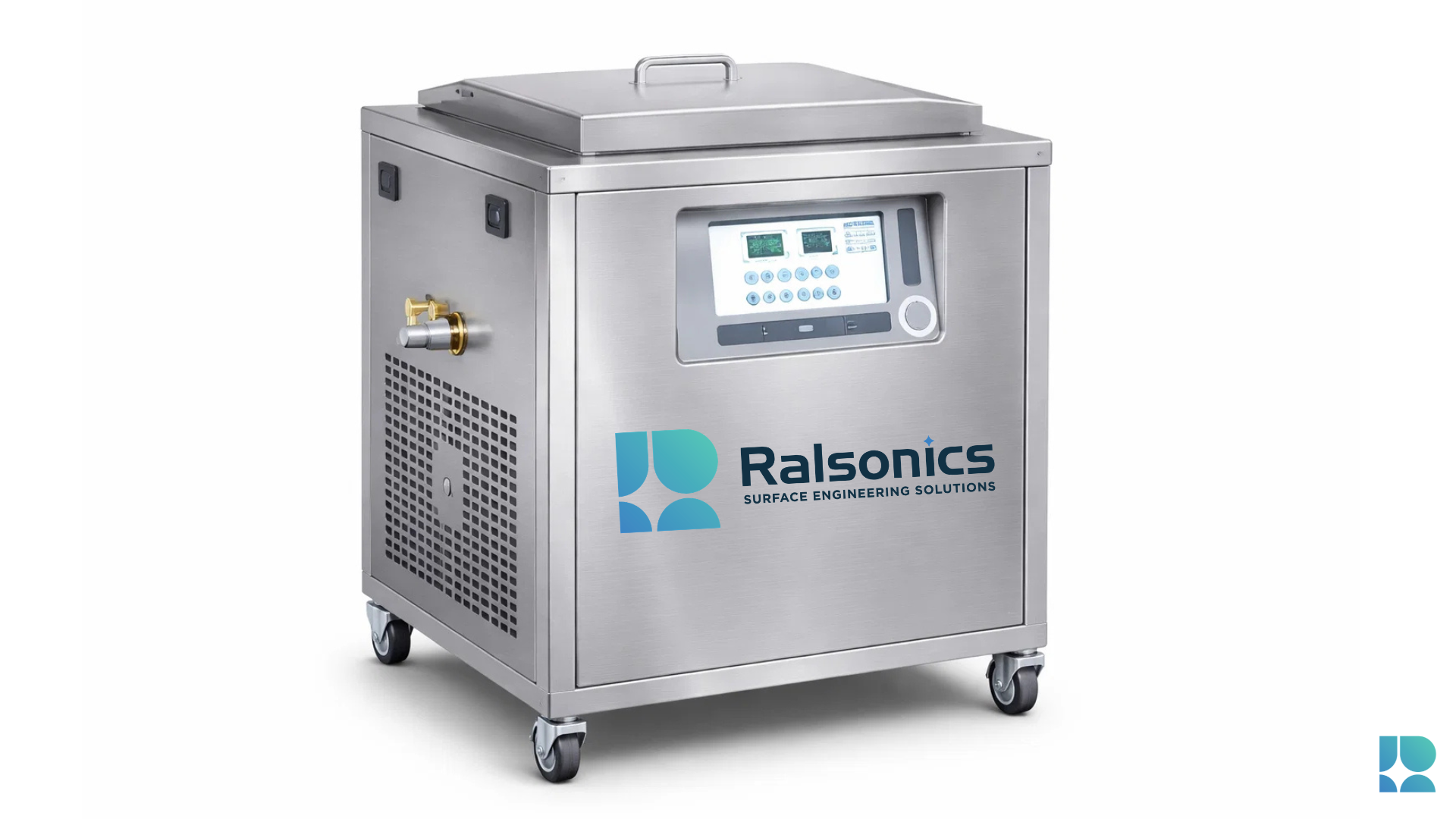
Sonicator with Chiller
Our Sonicator with Chiller provides an advanced solution for precise and efficient ultrasonic processing with integrated temperature control. Ideal for applications requiring low processing temperatures, this sonicator ensures thorough and consistent results while maintaining the integrity of temperature-sensitive samples. Its robust design and advanced features make it an essential tool for various scientific and industrial applications.
A Sonicator with Chiller is a specialized ultrasonic processing system designed to deliver powerful sonication while maintaining precise temperature control. Traditional sonicators generate significant heat during ultrasonic cavitation, which can degrade sensitive samples such as proteins, enzymes, DNA, RNA, cell cultures, and nanoparticles. By integrating a chiller unit, Ralsonics’ sonicators prevent overheating, ensuring consistent results, sample integrity, and reproducibility.
This makes them an essential tool for biotechnology, pharmaceuticals, nanotechnology, research laboratories, and chemical processing industries.
- Laboratory and research applications
- Biotechnology and pharmaceutical processing
- Chemical processing and homogenization
- Food and beverage emulsification
- Nanotechnology and material science
Perfect for applications where traditional methods fall short, the Sonicator with Chiller provides reliable and powerful performance, enhancing productivity and ensuring optimal results in laboratories, research facilities, and industrial settings.
- The sonicator probe emits high-frequency ultrasonic waves into the liquid sample, creating intense cavitation that disrupts cell membranes, homogenizes mixtures, and disperses particles.
- The chiller unit continuously circulates coolant around the sample container, maintaining a stable low temperature.
- This prevents thermal degradation and ensures controlled processing, even during prolonged or high-intensity sonication.
- Integrated Cooling System: Maintains stable sample temperatures during sonication.
- Adjustable Ultrasonic Power: Fine control over energy delivery for different applications.
- Digital Control Interface: Easy-to-use display for setting amplitude, pulse, and time.
- Programmable Cycles: Automated sonication with precise timing and pulsing options.
- Wide Frequency Range: Typically operates between 20 kHz – 40 kHz.
- Temperature Monitoring: Built-in sensors track and regulate sample temperature.
- High-Quality Probes & Tips: Available in different sizes and materials.
- Durable Build: Designed for continuous laboratory and industrial use.
- Prevents Sample Overheating: Maintains low temperature to protect sensitive biological materials.
- Improved Reproducibility: Consistent conditions lead to reliable experimental results.
- Extended Operation Time: Enables long-duration sonication without risk of heat damage.
- Versatile Applications: Suitable for biological, chemical, and nanotechnology processes.
- Higher Yield & Purity: Preserves structural integrity of proteins, enzymes, and nanoparticles.
- User-Friendly Operation: Intuitive controls and programmable functions.
- Biotechnology: Efficient cell disruption and homogenization for sample preparation while maintaining low temperatures.
- Pharmaceuticals: Emulsification and mixing of active ingredients with precise temperature control.
- Chemicals: Homogenization and degassing of chemical solutions with consistent cooling.
- Food and Beverage: Ensures consistent emulsification and homogenization of ingredients without overheating.
- Nanotechnology: Effective dispersion and processing of nanoparticles at controlled temperatures.
Features and Advantages
Features | Advantage |
|---|---|
Integrated Chiller System | Maintains controlled sample temperature and prevents overheating during sonication. |
High-Power Ultrasonic Generator | Delivers intense cavitation for efficient homogenization, cell disruption, and dispersion. |
Precise Temperature Control | Protects heat-sensitive samples such as proteins, enzymes, and biological materials. |
Adjustable Amplitude & Pulse Mode | Allows fine control of sonication intensity for different applications. |
Closed-Loop Cooling Circulation | Ensures consistent cooling performance and stable process conditions. |
Digital Display for Sonication & Cooling Parameters | Enables accurate monitoring and repeatable processing cycles. |
Stainless Steel Probe & Cooling Coil | Provides durability, corrosion resistance, and compatibility with various solvents. |
Reduced Sample Degradation | Minimizes thermal damage and preserves sample integrity. |
Continuous Operation Capability | Suitable for extended processing without temperature drift. |
Compact, Integrated Design | Saves lab space and simplifies installation and operation. |
Safety Features (Overheat, Overload Protection) | Protects both the equipment and the sample during operation. |
Ideal for High-Energy Applications | Supports nanoparticle dispersion, emulsification, and sonochemical reactions. |
Specification
Parameter | Specification |
|---|---|
Ultrasonic Frequency | 20 – 40 kHz |
Ultrasonic Power | 100 W – 2000 W |
Temperature Control | 4°C – 40°C (via chiller) |
Probe Sizes | 2 mm – 25 mm |
Material of Construction | Titanium probes, stainless steel housing |
Operation Modes | Continuous / Pulse |
Cooling System | Integrated chiller with digital temperature control |
Display & Controls | Digital / Touchscreen PLC |
Safety Features | Overload protection, auto-shutoff, fault alarms |
FAQ
Because ultrasonic cavitation generates heat, a chiller prevents sample degradation by maintaining low temperatures during processing.
Yes. Many models allow independent operation of the cooling system for flexible use.
Depending on probe size and power, they can process volumes ranging from a few milliliters to several liters.
Yes. A sonicator with chiller ensures stable, uniform nanoparticle dispersions without agglomeration due to overheating.