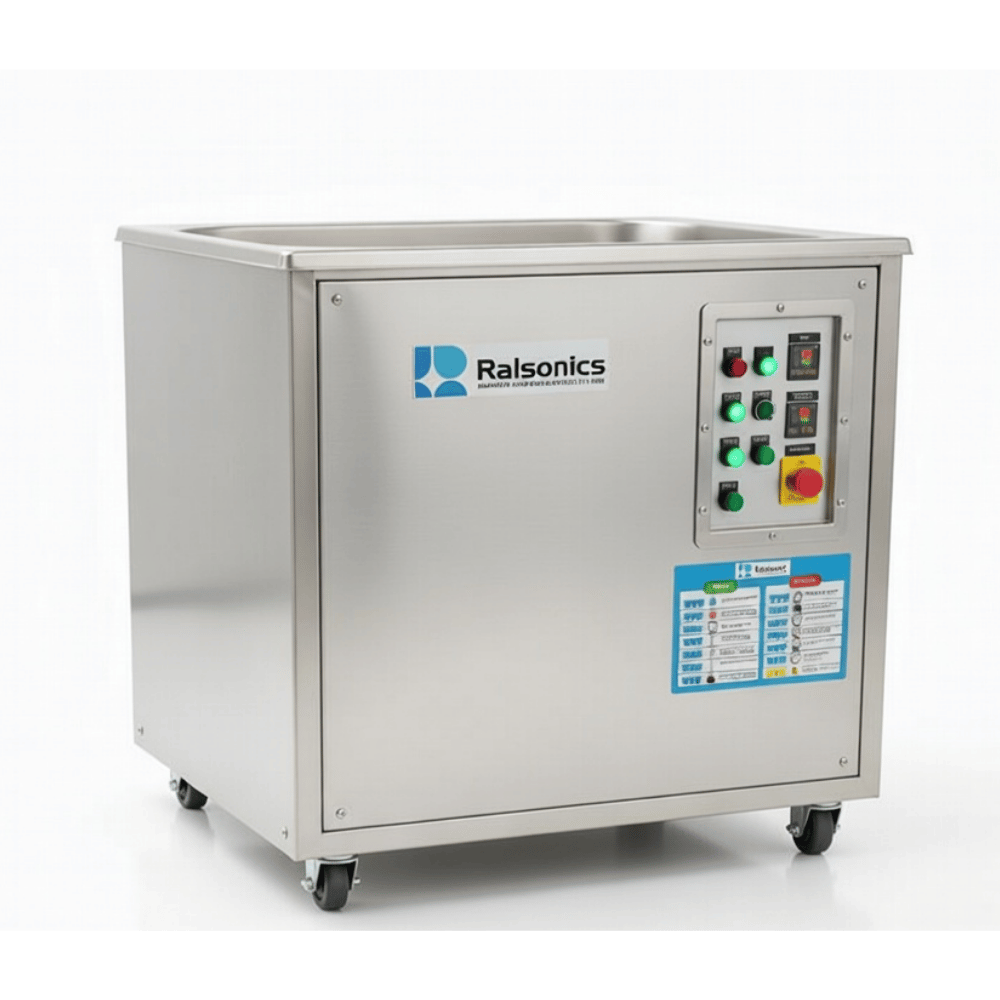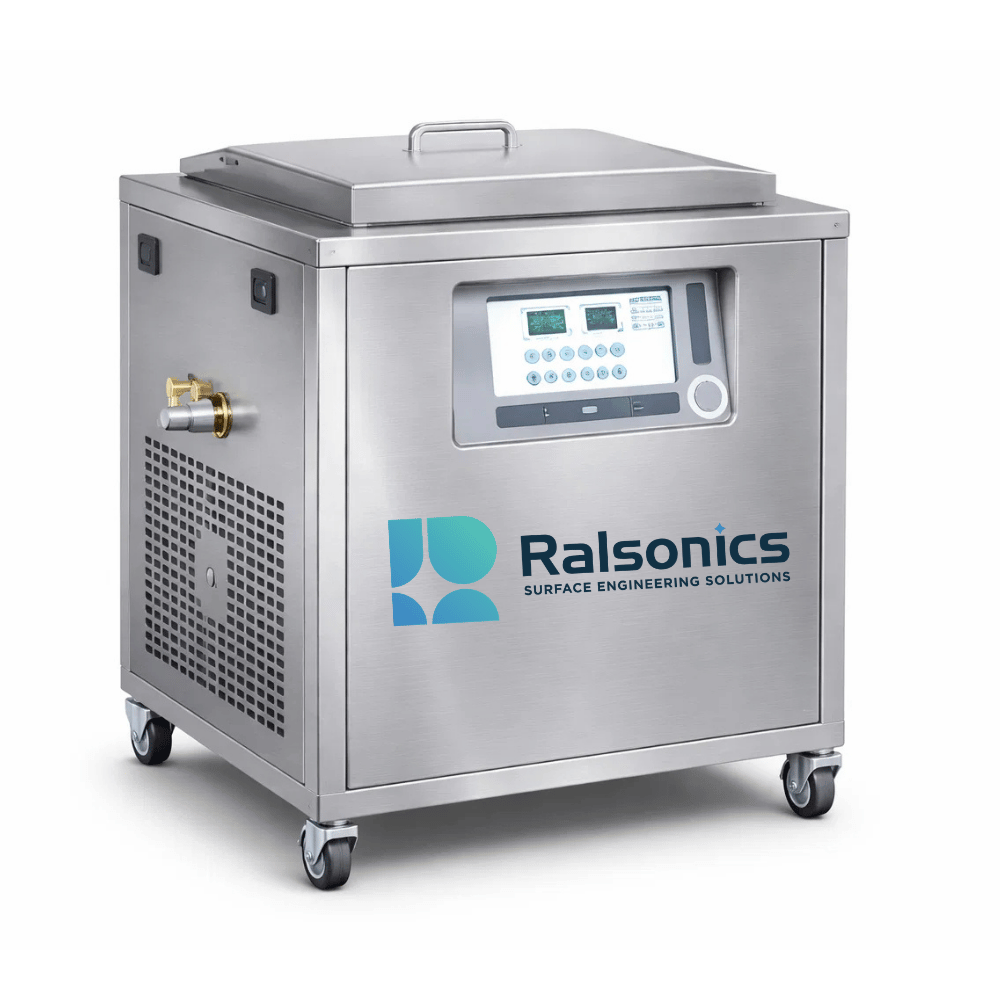
























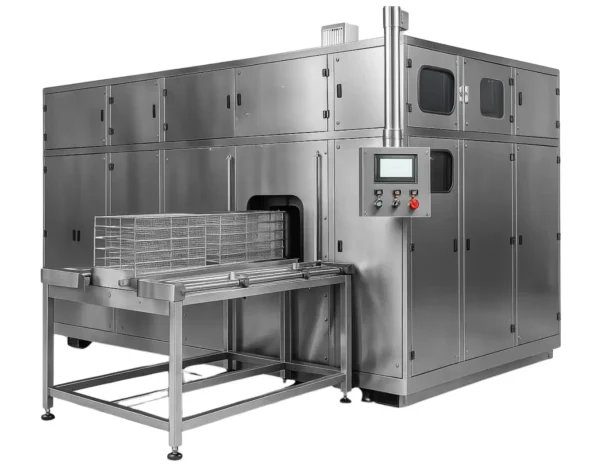
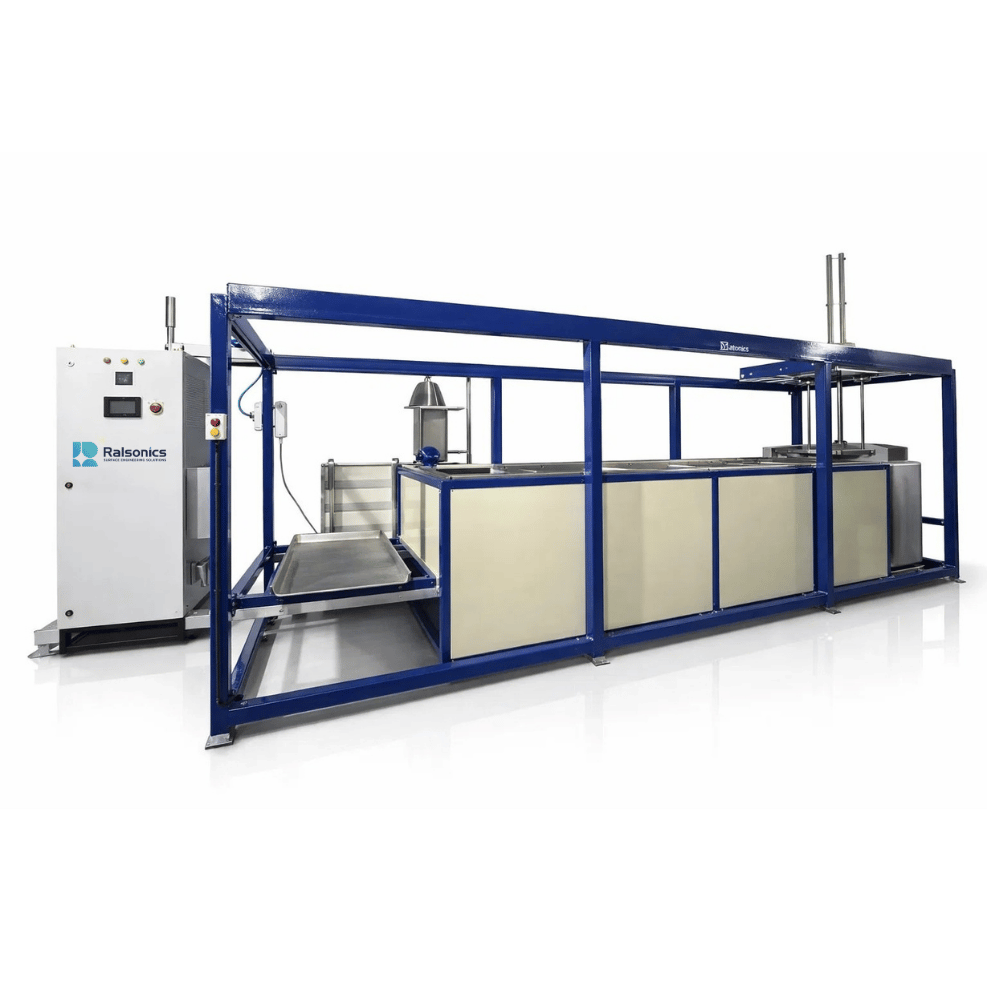
Single Chamber Multiprocess Cleaning Equipment

The Single Chamber Multiprocess Cleaning System is an advanced industrial cleaning solution designed to perform washing, rinsing, and drying within a single sealed chamber. By eliminating part transfer between stages, the system ensures contamination-free processing, reduced handling, and consistent cleaning quality.

Available in both solvent-based and aqueous (water-based) configurations, Ralsonics systems are engineered to meet stringent global environmental, safety, and performance standards. These systems are suited for industries that demand precision, repeatability, and regulatory compliance.

Working Principle

All cleaning stages are executed sequentially inside one sealed chamber:

Loading – Components are placed manually or automatically inside the chamber.

Cleaning

Solvent Version: Immersion, vapor degreasing, and optional ultrasonic agitation remove oils, grease, waxes, and particulates.
Aqueous Version: Water-based cleaning solution with ultrasonic or spray action removes contaminants.

Rinsing – Fresh solvent or water-based rinse eliminates residual contaminants.

Drying – Vacuum-assisted, hot-air, or infrared drying ensures components exit completely dry.

This closed-loop design prevents cross-contamination and ensures repeatable process control.

System Variants

1. Solvent Single Chamber System

Designed for high-precision degreasing and applications requiring rapid drying and low moisture tolerance.

Compatible Solvents:
Modified alcohols, hydrocarbons, and low-VOC eco-friendly solvents.

Typical Applications:
Medical implants, aerospace components, precision automotive parts, electronics, and optical assemblies.

2. Aqueous Single Chamber System

Designed for environmentally friendly cleaning using water-based chemistry.

Cleaning Medium:
Biodegradable aqueous solutions.

Typical Applications:
Automotive parts, medical tools, PCBs, machined components, and general manufacturing.

When to Use This?
  • Regular Maintenance: Ideal for routine maintenance of heat exchangers to ensure optimal performance.
  • Scale and Fouling Removal: Effectively removes scale, fouling, and other contaminants to improve heat transfer efficiency.
  • Industrial Applications: Suitable for cleaning heat exchangers in various industrial settings.
  • Precise and Gentle Cleaning: Provides thorough cleaning without damaging sensitive equipment surfaces.
How It Works

Ultrasonic transducers are mounted on or immersed in the heat exchanger system.

These generate high-frequency sound waves, creating microscopic cavitation bubbles in the fluid.

The implosion of bubbles produces micro-jets and shockwaves, which:

  • Break down and remove existing scale, fouling, and biofilm.
  • Prevent new deposits from adhering to the surfaces.

The process is non-invasive, chemical-free, and continuous, ensuring minimal downtime.

Key Features
  • Retrofit Design – Can be installed on new or existing sieve machines.
  • Mesh Anti-Clogging Technology – Prevents screen blinding and improves throughput.
  • Wide Frequency Range – Typically operates at 36 – 40 kHz ultrasonic frequency
  • Compatible with Fine Meshes – Works efficiently with meshes up to 20 microns
  • Digital Generator Control – Stable output with adjustable power settings.
  • Energy Efficient – Optimized ultrasonic power consumption.
  • Durable Build – Long-lasting stainless steel and robust transducer assembly.
  • Safe for Sensitive Materials – Gentle ultrasonic action avoids damage to fragile powders.
Advantage
  • Extended Equipment Life – Prevents corrosion and mechanical stress caused by scale buildup.
  • Higher Energy Efficiency – Clean surfaces ensure optimal heat transfer, lowering energy costs.
  • Reduced Downtime – Enables continuous operation without frequent manual cleaning.
  • Lower Maintenance Costs – Less need for chemical cleaning and mechanical scrubbing.
  • Eco-Friendly Operation – Supports green manufacturing with minimal chemical use.
  • Versatile Application – Suitable for water-cooled condensers, boilers, chillers, and industrial heat exchangers.
Industry Applications
  • Chemical Industry: Maintains optimal heat transfer efficiency in chemical processing equipment.
  • Oil and Gas Industry: Ensures cleanliness and efficiency of heat exchangers in refineries and processing plants.
  • Power Generation: Keeps heat exchangers in power plants operating efficiently.
  • Food and Beverage Industry: Ensures hygienic and efficient operation of heat exchangers used in food processing.
  • Pharmaceutical Industry: Maintains the cleanliness and efficiency of heat exchangers in pharmaceutical manufacturing.
  • HVAC Systems: Ensures optimal performance of heat exchangers in heating, ventilation, and air conditioning systems.

Features and Advantages

Features

Advantages

Single Sealed Chamber

Eliminates cross-contamination and reduces handling

Multi-Stage Integration

Washing, rinsing, drying in one compact unit

Ultrasonic Cleaning (Optional)

Deep cleaning for complex geometries

Vacuum-Assisted Cleaning & Drying

Spot-free, residue-free finish

Closed-Loop Solvent Recovery (Solvent Version)

Reduced solvent consumption and waste

Efficient Filtration System

Maintains cleaning consistency

PLC-Based Control System

Precise, repeatable automated cycles

Stainless Steel Construction (SS304/SS316L)

Durability and corrosion resistance

Customizable Process Cycles

Adaptable to various contamination types

Energy-Efficient Ultrasonic Generators

Provides effective cleaning with optimized power consumption.

Low Maintenance & Long Operational Life

Robust design ensures reliability in continuous industrial applications.

Technical Specifications

Parameter

Solvent System

Aqueous System

Chamber Type

Single Sealed Chamber

Single Sealed Chamber

Cleaning Method

Immersion, Vapor, Ultrasonic

Ultrasonic / Spray / Immersion

Cleaning Medium

Modified alcohols, hydrocarbons

Water-based solutions

Ultrasonic Frequency

Optional

25–80 kHz

Drying Method

Vacuum / Hot Air

Hot Air / Vacuum / Infrared

Chamber Capacity

Application-based

10 L – 500 L+

Construction

SS 304 / SS 316L

SS 304 / SS 316L

Automation

PLC with Touchscreen

PLC / Digital Control

Power Supply

230V / 415V, 50/60 Hz

220V / 415V, 50/60 Hz

FAQ

Which system should I choose – solvent or aqueous?

Selection depends on contamination type, drying requirement, and environmental compliance. Solvent systems are ideal for rapid drying and heavy degreasing, while aqueous systems are preferred for eco-friendly processing.

 
Can delicate components be cleaned safely?

Yes. Adjustable ultrasonic frequency and programmable cycles allow safe cleaning of precision components.


Is drying performed in the same chamber?

Yes. All stages occur in the same sealed chamber, eliminating transfer-related contamination.

 
Are these systems compliant with global standards?

Yes. Systems are designed in accordance with international environmental and safety regulations.


    Cart
    Select the fields to be shown. Others will be hidden. Drag and drop to rearrange the order.
    • Image
    • SKU
    • Rating
    • Price
    • Stock
    • Availability
    • Add to cart
    • Description
    • Content
    • Weight
    • Dimensions
    • Additional information
    Click outside to hide the comparison bar
    Compare